




When it comes to choosing paint colours for children’s bedrooms, there’s a lot to think about. It can be tempting to go for bold, bright colours that are playful and exuberant, but often these do not promote the sense of calm and tranquillity that’s beneficial for bedrooms. There’s also the added dimension of balancing parents’ preferences with children’s ideas.
So how do you get the balance right? Combine a bit of colour theory (how colours work together and affect our emotions) with a few decorating tricks and you have a recipe for success. Below, we’ll look at five great options for different age groups. We’ll also answer some of the most frequently asked questions about children’s bedroom paint colours.
5 classic children’s bedroom paint colours
1. Plump for pink
Pink is a classic choice that’s both nurturing and positive. To break things up and add another dimension, try teaming bubble-gum pinks (Bon Bon) with peach (Peach & Love) and warm metallics like rose gold or copper.
If you’re looking for more drama, or a vintage vibe, duskier, muted pinks look stunning when combined with small elements of black or charcoal for a sophisticated contrast. Options include Vintage Rosie, Rosy Dusk, Dusky Blush and Nougat.
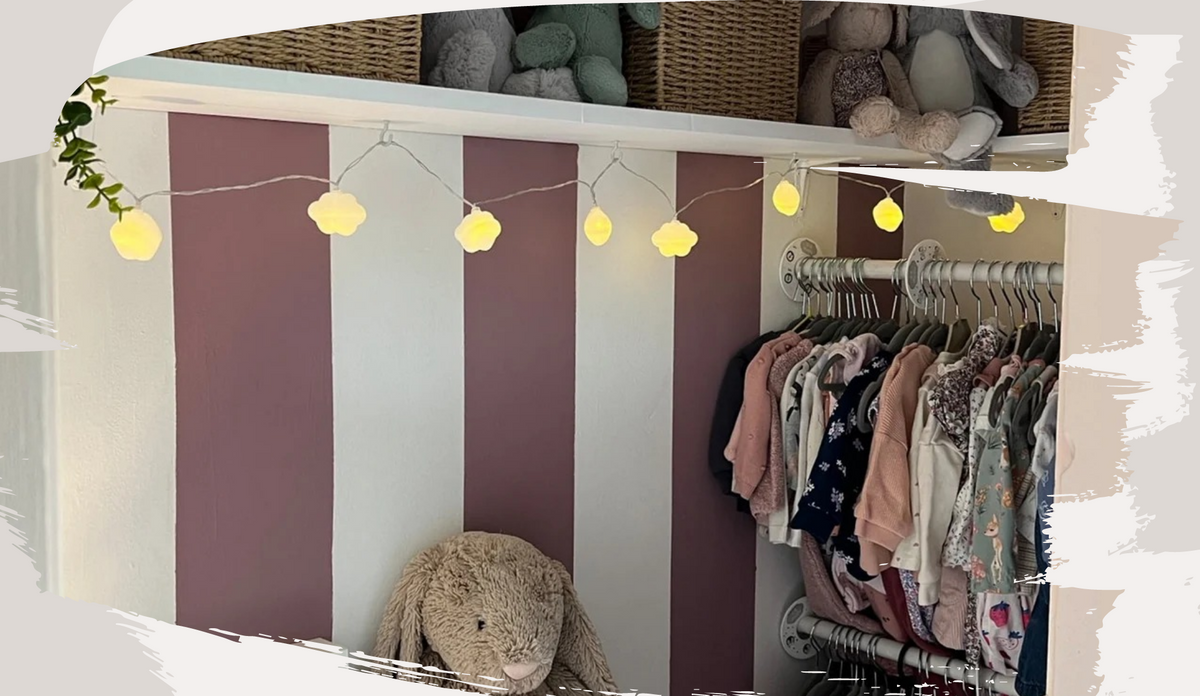
Or how about painting stripes, pairing one of these shades with a soft neutral like Pampas?
Alternatively, green is a great go-to for teaming up with pink. Together, these two can bring a cheerful and harmonious feel as cooler, fresher green balances the warmth of pink.
Read more about the psychology of pink in our article What Does Pink Make You Think?
2. Stay true to blue
The other ultimate classic for kids’ rooms, blue brings soothing and calming vibes. For a fresh, modern look, combine your blue of choice with soft white – or perhaps a cream for a more vintage feel. Kirsty (@houseofhaz) uses Anguilla with a fun white bed frame:
There are so many options other than the traditional baby blue too! Deep and smoky, denimy, lavender-hued and a range of ocean colours to help inspire you (and your child!) to create a blissful bedroom.
A great way to include a strong or dark blue is to opt for a half-and-half approach. This is easy if you have panelling installed, but otherwise, you can simply mask up your wall and paint. Use the stronger colour for the lower portion and a white or similar for the upper portion to keep things light and airy like this delightful combination of Cream Dream and Ol’ Blue Eyes...
3. Go for green
Generally restful and serene, greens work practically anywhere. They are an effective alternative to blue in a cold-feeling, north-facing room. Lime-toned greens like Apple Barn and Lime Light feel uplifting and optimistic whilst soothing teal (a more blue-toned green) is one of the great mixers of the colour world, so you can bring it to any setting with confidence. Teal shades include Calming Carol and Verdigris.
Strong greens can satisfy a child’s wish for brighter colours. But they have the benefit of being less intense, lacking the high energy of hot colours like reds or oranges. Remember – lower energy is better for bedrooms (especially at bedtime!)
Team a bright emerald green like Emerald Isle with plenty of white, natural materials like woods, and even some black detailing – and you have a strong look for any age group.
4. Some rules for red
Red brings energy. It’s stimulating, bold and totally fabulous! Kids love it, but it can be a little too intense for children’s bedroom paint colours, where you want to create a relaxed environment.
A great solution is to have the red you want but use it to inject pops of colour. Here’s how you can apply reds sparingly in children’s bedrooms:
- Add simple motifs like stars and/or stripes to a wall
- Paint small elements like a chair, shelf or lamp base
- Include red with any of the colours above – teaming red, white and blue is an absolute classic, but red will also energise pink and complement green.
To read more about adding reds to your home, try our article Seeing Red: The Rouge Resurgence.
5. Or are you naturally neutral?
If you’re firmly camped in team neutral when it comes to colours, you may not feel confident choosing strong paint colours for your little one’s room. A great way to start is by looking at muted versions of these colours, such as:
- Soft, grey-based blues such as Duckling or Smooch
- Pale greens (Wise Old Sage) or duck eggs (Little Duckle)
- Even lighter earthy reds like Clay Pot
- Dusky or vintage pinks – see Dusky Blush below
Think about colour blocking a single wall or painting the woodwork and/or furniture rather than all the walls. This way, you can tread the path towards well-loved children’s bedroom paint colours, whilst keeping things pared back and calming.
Advice for kids’ bedroom colours by age
Babies & toddlers: calm, flexible and gentle
When you’re decorating for babies and toddlers, the goal is a soothing, adaptable space that supports rest while gently stimulating developing senses. At this early stage, rooms are often used for sleeping, feeding and quiet play, so softer, low-contrast colours tend to work best for you and your little one. Gentle tones help them avoid overstimulation and promote a much-needed sense of comfort and security. For example, The Monochrome Manor (@themonomanor) uses Cool Beans and Whitey White:
If you’re decorating before your baby arrives or prefer not to focus on gender, nature-inspired colours are a safe and timeless choice. Think warm neutrals, soft greens, muted blues or gentle clay and oat tones. These feel balanced and welcoming without leaning too strongly in any one direction.
It’s also worth thinking ahead. Babies quickly become toddlers, and choosing a flexible base colour means the room can evolve easily. You can introduce personality later through artwork, toys, textiles and feature details, rather than relying on bold paint colours that may feel dated as your child grows.
Primary age (4-10): playful, balanced and imaginative
For children in the primary school years, you typically want bedrooms to strike a balance between fun and calm. At this age, your kids are becoming more expressive and opinionated, but they still benefit from spaces that support rest and routine. Colour can play a big role in encouraging imagination without tipping into overstimulation.
This is a great stage to introduce more colour, but with a bit of structure. Instead of fully saturating the room, consider using colour zoning, feature walls or painted details to create interest. This allows space for creativity while keeping the overall feel settled.
Here’s a great example from Cheryl (@creative_mama_che), who adds a pink corner to her daughter’s room around the bed with Pinky. She uses a scalloped affect to add more interest without overwhelming the space with colour.
It’s also worth thinking practically. Children’s tastes can change quickly between ages four and ten, so choosing a versatile base colour gives you flexibility. Remember, you can refresh the room easily with artwork, wall decals or accessories as interests evolve, without having to paint from scratch every few years.
Pre-teens & teens: personality, independence and longevity
From around age 10 onwards, a child’s bedroom becomes much more personal. As well as sleeping, their bedroom is somewhere they can relax, study, socialise and express their individuality. At this stage, it’s important to involve your child in colour choices so they feel a sense of ownership and independence.
That said, balance is key. Strong colours and dramatic contrasts can be exciting, but using them thoughtfully will help the room stand the test of time. A calmer base colour on the walls can provide longevity, with bolder shades introduced through feature walls, furniture or accessories that are easier to update as tastes change.
Consider how the room is used throughout the day. Softer, more grounded colours support focus and rest, while darker or moodier tones can feel cosy and grown-up when paired with good lighting. Ultimately, you want a space that reflects your teen’s personality while still feeling comfortable, practical and adaptable as they grow.
If you’re looking for inspiration, check out the cool DIY cabin bed by Kaleigh (DIY Mum) below. She used Hornblower Chalk Wall Paint on the walls matched with Hornblower Al Fresco on the bed frame for a colour-drenched look. It’s complete with a cool DIY climbing frame and a homemade desk to create a bedroom packed full of personality.
Children’s bedroom paint colours: FAQs
What colour is most calming for kids?
It will come as no surprise that most of the colours mentioned in this article have their own claim to calming qualities. Blue is commonly used for a calming effect due to its natural connotations – a clear sky or the soothing ocean waves. Similarly, green reflects our affinity with the outdoors – think green therapy.
Interestingly, pink is also known as a calming colour due to its warm, comforting vibe. It provides this without the energy and overwhelming nature of other colours like red or orange.
What is the best paint for a kid’s bedroom?
Kid’s bedrooms often double up as playrooms or hangout spaces as they get a little older. With this in mind, you can expect heavy usage with plenty of knocks, bumps and scuffs. The best paint for this environment is something that’s highly durable and scuff resistant. Frenchic’s Chalk Wall Paint and Trim Paint ranges both have high scuff resistance, plus EN 71-3 certification for use on children’s toys.
What is the best colour for a kid’s study room?
You can use any of the colours discussed in this article for a kid’s study room, with greens, blues and pinks amongst the most beneficial. You may want to opt for a more pared-back shade – even a neutral with green, blue or pink undertones – to promote focus in your child’s study space.